
Biocuration Insights: UniProt

Biocurators organize biological literature and data into reusable databases and resources that enable researchers to build on past findings, compare results across studies and species, and focus their time on critical scientific questions and drive new research. In many ways, biocurators are the unsung heroes of scientific progress. Therefore, we’re kicking off a series to highlight these efforts.

Our first highlighted resource in this series is the Universal Protein Resource, better known as UniProt (https://www.uniprot.org).

UniProt is a global, freely accessible protein knowledge resource that underpins research across biology, medicine, and biotechnology by combining expert curation, computational methods, and community input to deliver accurate, current, and usable protein information. These biocuration efforts transform large-scale protein data into reliable biological knowledge by carefully selecting high-quality reference proteomes, rigorously extracting experimental evidence from the literature, and structuring representation using interoperable vocabularies and ontologies. UniProt maintains its strong focus on usability—through intuitive search, navigation, and integrated analysis tools—allow researchers to move seamlessly between curated knowledge and methods such as sequence searches, alignments, peptide analysis, and identifier mapping. By integrating community contributions and machine-learning–assisted workflows under expert oversight, this work highlights biocuration as a collaborative, evolving practice essential for understanding biology at scale.

The first paper we’re highlighting is UniProt: the Universal Protein Knowledgebase in 2025 – it provides a foundational infrastructure update—high relevance to ISB community:

  • Core Biocuration Contribution: systematic overhaul of UniProt pipelines, limiting to high‑quality reference proteomes; combines expert annotation, ORCID‑tracked community submissions, and machine‑learning frameworks (UniRule, ProtNLM) to expand functional data and QC.
  • Key Methods:
    • BUSCO‑driven QC & reference‑proteome selection
    • Expanded UniRule & PANTHER rule sets; LLM‑based ProtNLM function naming
    • New Genomics tab linking proteins to genome coordinates
    • Community curation via ORCID submissions
  • Resources Resused: UniProtKB/Swiss‑Prot, UniProtKB/TrEMBL, UniParc, UniRef, Gene Ontology, ChEBI, Rhea, GO‑CAM, InterPro, ProtVista, Complex Portal
  • Impact/Applications: provides a trusted, FAIR backbone for AI/omics research, drug discovery and database interoperability; recognised as a Global Core Biodata Resource.
  • Strengths: Combines expert & ML curation; robust QC; large‑scale reach.
  • Caveats/Limitations: ML predictions need curator validation; initial drop in TrEMBL size.

The second paper we want to highlight is The UniProt Consortium. Searching and navigating UniProt databases (2023):

  • Core Biocuration Contribution: Peer‑reviewed tutorial standardising discovery of curated UniProt knowledge; boosts accessibility and reproducibility.
  • Key Methods:
    • Basic & advanced search protocols with Boolean logic and field filters
    • Demonstrates integration with analysis tools
    • Emphasises FAIR API endpoints and query syntax
  • Resources Reused: UniProtKB, UniRef, UniParc, Proteomes dataset selector, BLAST, Align, ID‑Mapping, REST & SPARQL APIs
  • Impact/Applications: empowers users to retrieve accurate annotations, enabling reproducible data mining and training
  • Strengths: Clear, screenshot‑rich, modular; open access.
  • Caveat/Limitations: Instructional—no new biological data; UI changes may date examples.

We hope you enjoyed this quick-and-dirty summary of two recent papers. Want ISB to highlight your work? Check out this form.
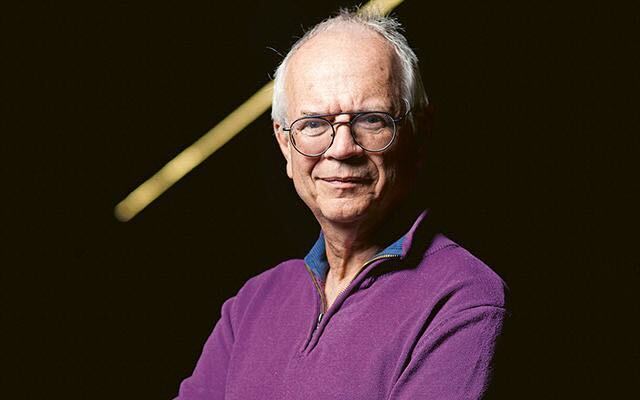
Amos Bairoch, a biocurator at heart, passes away

It is with great sadness that we learned the passing of Prof. Amos Bairoch on November 29th, 2025. Amos was a deeply valued and admired colleague, as well as a cherished friend to many within the biocuration community. His remarkable blend of enthusiasm, intellect, energy, creativity, humor, and rigor fueled the numerous initiatives he led. His unwavering work ethic consistently resulted in work of exceptional quality.

Amos can be considered the original professional biocurator, even though he came about it in an accidental way – as all great breakthroughs. During his Ph.D. at the University of Geneva, Switzerland, he was taken off the bench path due to a faulty mass spectrometer in the early 1980s. While waiting for the machine to be repaired, he started to work on a software package (PC/Gene) to analyze protein sequences. The software relied on the Protein Identification Resource (PIR) of the National Biomedical Research Foundation (NBRF), that had been developed by Margaret Dayhoff starting in 1965. This set the scene for Swiss-Prot to emerge in 1986 as Amos had broadened Dayhoff’s protein curation to produce a structured on-line resource. Protein annotation needed to abide by rules and Amos set out to state those rules, share them with other biocurators thereby initiating standards.

Many years before the development of biomedical ontologies, Amos spearheaded the development of controlled vocabularies and was aware of the need to channel those efforts within the life science community. He co-founded the Swiss Institute of Bioinformatics (SIB) in 1998 with Ron Appel, who had launched Expasy, one of the first web servers for molecular biology, at the time tailor-made to hosting Swiss-Prot.

Amos’ major input to biocuration was praised all throughout. He was recognized with an Exceptional contribution to ISB award in 2021. Ten years earlier, his contribution to the expansion of proteomics was crowned by the HUPO Distinguished Achievement Award in Proteomic Sciences (2011). As recently as 2025, the International Society for Computational Biology (ISCB) acknowledged his commitment with a Senior Scientist Accomplishment award. Importantly for the biocuration community, the seed of ISB was planted in many minds and, with his impulse, it was established in Switzerland in 2009.

Amos was a relentless biocurator and probably one of the most productive in the array of curated databases. Whoever has seen him sitting in meetings will always remember his eyes and fingers stuck on a laptop and whether he was gathering information on proteins for Swiss-Prot (1986-2009), neXtprot (2009-2022), or cell lines for Cellosaurus (2014-2025), it remained an obsessive task for him. Yet, as soon as he raised his head from his laptop, he would be keen to discuss and share on the latest cool information he found or on any topic anyone would bring about.

We say goodbye to a great scientist, colleague, and friend, but his legacy will continue to inspire.

Executive Committee 2024 Election Winners

As announced at the Annual General Meeting earlier this week, we would like to congratulate the following three individuals who have been elected by members of the International Society for Biocuration to serve on the society’s Executive Committee from 2024:

  1. M. Victoria Nugnes (University of Padua)
  2. Sonia Balyan (Indian Biological Data Centre)
  3. Peter Uetz (Virginia Commonwealth University)

We would also like to thank the election officer, Harry Caufield, and the nominating committee for making this election run smoothly:

  1. Sabrina Toro (Chair)
  2. Pascale Gaudet
  3. Silvio Tosatto
  4. Saurabh Raghuvanshi
  5. Raja Mazumder

More information on the Executive Committee can be found here.

Alliance of Genome Resources Webinar – An Introduction to the Alliance

Carol Bult (0000-0001-9433-210X) will present An Introduction to the Alliance on September 19th, 2024. This will cover searching the Alliance, gene pages, and disease pages and will include a Q & A session. This is the first in an ongoing series.

Register by September 18 to receive the Zoom URL. You can find the registration link here: https://www.alliancegenome.org/news/webinar-an-introduction-to-the-alliance

Announcement for the 2024 Annual General Meeting (AGM)

The International Society for Biocuration (ISB) will hold its Annual General Meeting (AGM) on Tuesday, October 29th, 2024 along with presentations by our two biocurator career award winners, Sushma Naithani and Maria Victoria Nugnes.

Time:

  • 3:00–5:00 pm CET (Central European)
  • 2:00–4:00 pm GMT (British)
  • 10:00 am–12:00 pm EST (Eastern)
  • 8:00–10:00 am PST (Pacific)

Note that daylight savings begins in Europe/UK on October 27th, 2024 and daylight savings begins on November 3rd, 2024 in the USA, so there’s a slightly different offset than usual. All canonical times for this event are based on European time!

Schedule (in CET):

This meeting will be recorded, by attending the meeting you are agreeing to be recorded. The recording will be available on the ISB website after the meeting.

2025 Applications for Travel Fellowships

Submit applications using the Travel Fellowship Application Form

Application deadline extended until 5:00 PM Eastern Time November 25th, 2024

There are 1 in-person (low-income country only) and 5 virtual awards remaining.

Applications are open until 5:00 PM Eastern Time, October 31st, 2024.

For the 2025 conference in Kansas City, the ISB will offer 4 In-Person Travel Fellowships covering up to 2,500 CHF in costs. The ISB will also offer 5 Virtual Travel Fellowships covering the the cost of early bird member or non-member virtual registration for the conference.

The award notification will be sent via email at least 3 months before the conference will take place.